
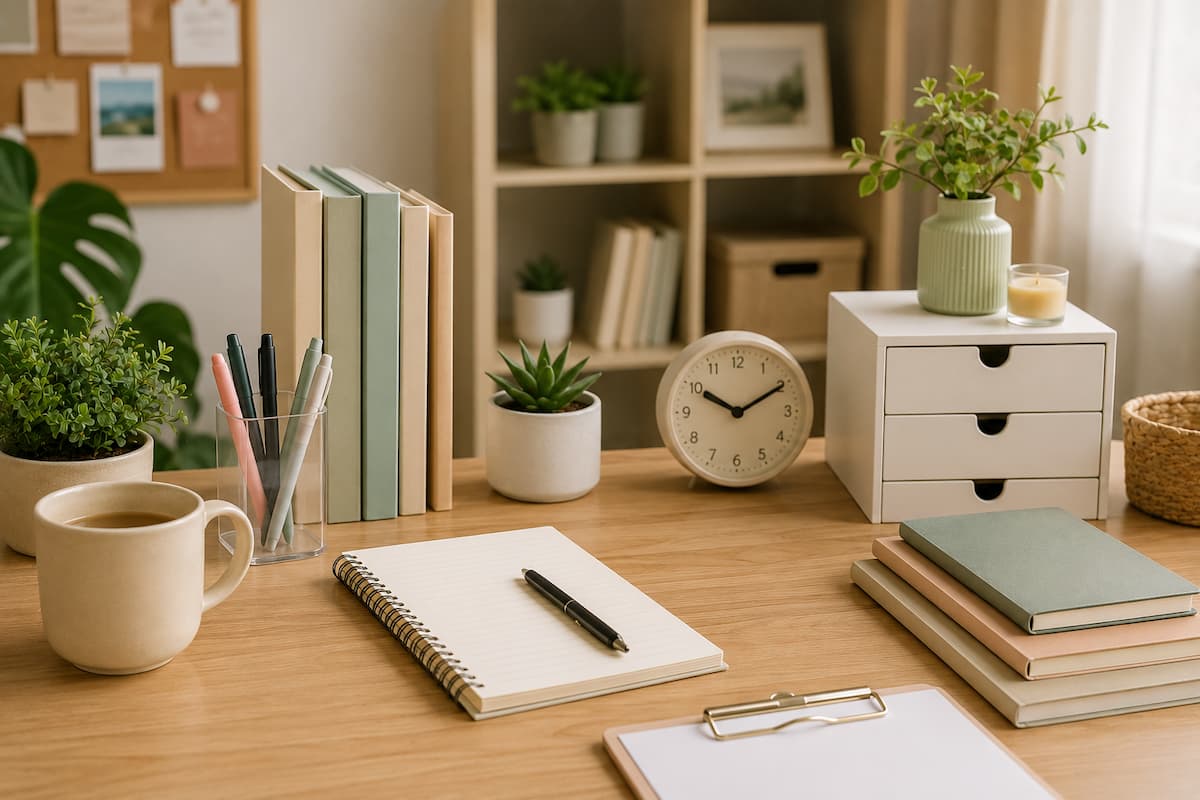
I used to think being organized meant having a color-coded planner and a spotless kitchen. Then I had three kids, a full-time job, and a dog that sheds like it’s his job. The planner got buried under mail. The kitchen looked like a tornado hit it by Wednesday. And I realized something: organization isn’t about perfection. It’s about having systems that work when life doesn’t.
This article isn’t about turning your home into a Pinterest board. It’s about building simple systems that keep your daily life from spiraling—without adding more stress than they remove.
Why Most Organization Advice Makes You Feel Worse
You’ve seen the advice. Declutter your entire house in a weekend. Plan every hour of your day. Maintain a capsule wardrobe with exactly 37 pieces. It’s well-meaning, but it misses something critical: organization should reduce your mental load, not increase it.
When a system is too rigid, it becomes another source of anxiety. You feel guilty for not following it perfectly. You abandon it entirely when life gets busy. And then you’re back where you started, except now you also feel like a failure.
The solution isn’t more discipline. It’s a better design. Systems that bend instead of break. Systems that work with your actual life, not the one you wish you had.
The “One In, One Out” Rule (And Why It Actually Works)
This isn’t a new idea, but it’s one of the most effective organizational principles I’ve ever used. Every time something new enters your space, something old leaves.
New shoes? Donate an old pair. New kitchen gadget? Get rid of the one you haven’t touched in two years. New book? Pass one along to a friend.
The magic isn’t in the math. It’s in the mindset shift. You stop accumulating by default. You start making conscious choices about what deserves space in your life. And over time, your home stops feeling like it’s closing in on you.
This applies to your schedule too. Before you commit to something new, ask: what am I willing to let go of? If the answer is nothing, you might not have room for it.
Time Blocking: The Flexible Version
Traditional time blocking assigns every minute of your day to a specific task. 7:00 AM: workout. 8:00 AM: email. 9:00 AM: deep work. It looks beautiful on paper and falls apart by Tuesday.
Flexible time blocking is different. Instead of scheduling tasks to the minute, you assign broad categories to chunks of your day. Morning: focused work. Midday: meetings and communication. Afternoon: administrative tasks. Evening: personal time.
Within those blocks, you have freedom. If a meeting runs long, you adjust. If you finish early, you move on. The structure gives you direction without the suffocation of a minute-by-minute plan.
| Time Block | Category | Example Activities |
|---|---|---|
| 6:00 – 9:00 AM | Morning routine | Wake up, movement, breakfast, transition to work |
| 9:00 AM – 12:00 PM | Deep work | Creative projects, problem-solving, writing |
| 12:00 – 1:00 PM | Break | Lunch, walk, screen-free time |
| 1:00 – 3:00 PM | Communication | Emails, calls, meetings, collaboration |
| 3:00 – 5:00 PM | Administrative | Planning, organizing, errands, maintenance |
| 5:00 PM onwards | Personal time | Family, hobbies, rest, wind-down |
The key is buffer time. Don’t schedule tasks back-to-back. Leave 10-15 minutes between blocks for transitions, unexpected interruptions, or simply catching your breath.
The Sunday Reset (15 Minutes, Not 3 Hours)
A lot of people talk about a “Sunday reset” like it’s a full-day project. It doesn’t have to be. In fact, the shorter and more focused it is, the more likely you’ll actually do it.
Here’s my 15-minute version:
- Clear surfaces. Countertops, desks, tables. Put everything back where it belongs.
- Check the calendar. Look at the week ahead. Note any appointments, deadlines, or commitments.
- Plan three priorities. Not ten. Three. The things that, if accomplished, would make the week feel successful.
- Prep one thing. Maybe it’s laying out clothes for Monday. Maybe it’s prepping breakfast ingredients. One small act of future-you kindness.
- Empty the trash. All of them. Bathroom, kitchen, office. There’s something deeply satisfying about starting the week with empty bins.
That’s it. Fifteen minutes. Not a deep clean. Not a life overhaul. Just enough to start Monday without feeling behind before you begin.
The “Home for Everything” Principle
Clutter isn’t just stuff. It’s decisions you haven’t made yet. The pile of mail on the counter? Decisions about what to keep, what to toss, what to act on. The clothes on the chair? Decisions about whether they’re clean or dirty, whether you’ll wear them again, where they actually belong.
The “home for everything” principle eliminates those lingering decisions. Every item in your house has a designated spot. When you finish using it, it goes back. No thinking required.
This sounds obvious, but most homes violate it constantly. Keys end up on the kitchen table instead of the hook by the door. Shoes pile up at the entrance instead of going in the closet. Bags get dropped on the nearest surface instead of being put away.
Start with the things you use every day. Keys, wallet, phone, shoes, bag. Give each one a specific home. Make it easy to put them there—preferably on the way to wherever you’re going next. The easier the system, the more likely you’ll use it.
Digital Organization: The Invisible Mess
Physical clutter gets all the attention, but digital clutter is just as draining. Thousands of unread emails. A desktop covered in random files. Notifications are popping up every few minutes. Your phone is buzzing with alerts you don’t care about.
Here’s a simple system that doesn’t require becoming a digital minimalist:
- Unsubscribe ruthlessly. Every promotional email you get is a tiny tax on your attention. Take 10 minutes and unsubscribe from anything you don’t actively want to read.
- Use folders, not the inbox. Your inbox is not a to-do list. Move emails to folders (or labels, if you use Gmail) once you’ve acted on them. An empty inbox isn’t the goal—an organized one is.
- Turn off non-essential notifications. You don’t need to know immediately when someone likes your photo or when a store has a sale. Batch your checking instead of being interrupted.
- Delete photos weekly. Not everything needs to be saved. Go through your camera roll once a week and delete the duplicates, the blurry shots, the screenshots you’ll never look at again.
Your digital space should feel as calm as your physical one. Not because you spent hours organizing it, but because you built habits that prevent the mess from accumulating in the first place.
The 2-Minute Rule
Borrowed from David Allen’s Getting Things Done methodology, the 2-minute rule is beautifully simple: if a task takes less than two minutes, do it now.
Put the dish in the dishwasher. Reply to the quick email. Hang up the coat. File the paper. These tiny tasks, when deferred, pile up into overwhelming mountains. When handled immediately, they disappear without a trace.
The trick is recognizing what actually takes two minutes versus what feels like two minutes. Folding one shirt? Two minutes. Folding the entire laundry basket? Not two minutes. Reply to one email? Two minutes. Writing a thoughtful response to a complex question? Not two minutes.
Be honest with yourself. The goal isn’t to do everything immediately. It’s to prevent the small stuff from becoming big stuff.
Batching: Do Similar Things Together
Your brain pays a switching cost every time you change tasks. Going from email to writing to a phone call to data entry isn’t efficient—it’s exhausting. Batching means grouping similar tasks and doing them all at once.
Answer all your emails in one block. Make all your phone calls in another. Run all your errands in a single trip. Cook multiple meals at once on Sunday.
This isn’t just about efficiency. It’s about preserving your mental energy. When you’re in “email mode,” you stay in email mode. When you’re in “errand mode,” you stay in errand mode. The transitions between modes are where energy leaks out.
Start by identifying your most frequent task categories. Then look at your week and see where you can group them. Even batching two or three similar tasks makes a noticeable difference.
When to Let Go of a System
Not every system works forever. Life changes. Seasons change. What kept you organized when you were single and working from home won’t work when you have kids and a commute. What worked during a calm period won’t work during a crisis.
The sign that a system needs to change isn’t that you failed at it. It’s that maintaining it costs more energy than it saves. If your planner makes you anxious, stop using it. If your meal prep routine feels like a second job, simplify it. If your morning routine takes an hour and leaves you stressed, cut it down.
Organization is a tool, not a religion. Use what works. Discard what doesn’t. And permit yourself to change your mind.
Start With One Thing
If you take nothing else from this article, take this: don’t try to organize everything at once. Pick one area. One system. One habit. Get it working. Then move to the next.
Maybe it’s giving your keys a home. Maybe it’s unsubscribing from promotional emails. Maybe it’s doing a 15-minute Sunday reset. Whatever it is, start there. Build the muscle of organization one rep at a time.
Because the truth is, an organized life isn’t built in a weekend. It’s built in tiny decisions, repeated daily, until they become automatic. And when they do, you’ll wonder how you ever lived any other way.
Not because you’re perfect. Because your systems are holding you up, even on the days when you can’t hold yourself up.
You May Also Like
These articles from our site explore organization, routines, and simplicity from different angles:
- How to Build Better Routines Without Feeling Overwhelmed — A deeper dive into routine-building that doesn’t rely on willpower.
- How to Create a More Relaxing Home Environment — Because organization and calm go hand in hand.
- The Quiet Power of a Decluttered Nightstand — Small spaces, big impact. Start here if you don’t know where to begin.
- How to Stack New Habits Onto Existing Ones the Right Way — The science of building habits that actually stick.
- How to Create a Better Wind Down Routine at Night — Organize your evenings so your mornings feel easier.
- How to Build a Transition Ritual Space Between Work and Home — Boundaries that protect your personal time.
- The Case for Boring Routines and Why Excitement Isn’t the Goal — Why predictability isn’t a bad thing.
- How to Design a Morning Routine Space That Actually Works — Set up your space so your morning runs itself.
References
- Allen, D. (2001). Getting Things Done: The Art of Stress-Free Productivity. Penguin Books. — The foundational text on productivity systems, including the 2-minute rule and task management.
- Kondo, M. (2014). The Life-Changing Magic of Tidying Up. Ten Speed Press. — The “spark joy” methodology and its impact on intentional organization.
- Clear, J. (2018). Atomic Habits: An Easy & Proven Way to Build Good Habits & Break Bad Ones. Avery. — Habit stacking and environment design principles for sustainable routines.
- Becker, J. (2016). The More of Less: Finding the Life You Want Under Everything You Own. WaterBrook. — Minimalism as a practical tool rather than an aesthetic ideal.
- Mark, G., Gudith, D., & Klocke, U. (2008). “The cost of interrupted work: More speed and stress.” Proceedings of the SIGCHI Conference on Human Factors in Computing Systems, 107-110. — Research on task-switching costs and the cognitive impact of interruptions.
- Williams, R. (2023). Get Stuff Done Without the Stress. Independently published. — Therapist-backed strategies for building routines without overwhelm.
- Sullivan, D. (2016). The One Thing: The Surprisingly Simple Truth Behind Extraordinary Results. Bard Press. — The power of focus and prioritization in daily productivity.
Abut this article: I wrote this because I’ve been the person with the perfect planner and the messy house. I’ve tried systems that looked great on Instagram and fell apart by Wednesday. What I’ve learned is that real organization isn’t about aesthetics—it’s about function. The systems in this article are ones I actually use, modified over the years of trial and error. If they help you find even a little more calm in your daily chaos, that’s enough.
