
Last Updated: June 1, 2026 | Reading Time: 7 minutes
You crawl into bed after a long day, reach for your phone to set tomorrow’s alarm, and knock over a half-empty water bottle, a tangled charging cable, a book you started three months ago, and a pile of receipts you meant to throw away. Suddenly, your final moments of consciousness are spent in mild frustration rather than peaceful wind-down.
This small scene plays out in millions of bedrooms every night. The nightstand—often the last surface we see before sleep and the first we encounter upon waking—has become a dumping ground for life’s clutter. But what if this overlooked piece of furniture held more power over your sleep, your mornings, and your mental state than you ever realised?
A decluttered nightstand isn’t about minimalism for aesthetics. It’s about designing a boundary between your waking life and your rest. It’s about signalling safety to your nervous system. And it’s about creating a physical space that supports the psychological transition into sleep. In this article, you’ll discover why your nightstand matters, what belongs there, what doesn’t, and how to maintain it as a sanctuary rather than a storage unit.
Why Your Nightstand Is More Important Than You Think
Most people choose their nightstand based on bedroom aesthetics or available floor space. Few consider it a tool for sleep hygiene. Yet this small surface sits at the intersection of your day and your night, your conscious mind and your subconscious rest.
Research from the National Sleep Foundation consistently shows that bedroom environment quality directly impacts sleep onset, duration, and depth. While mattress quality and room temperature get most of the attention, the immediate surroundings of your sleep space—including your nightstand—create subtle but powerful psychological cues.
The Psychology of Bedside Clutter
Your brain processes visual information constantly, even when you’re not consciously focusing on it. A cluttered nightstand sends low-grade stress signals to your amygdala, the brain’s threat-detection centre. Each item represents an unfinished task: the unread book whispers about your abandoned goals, the work papers remind you of tomorrow’s deadlines, the random objects signal that your space—and by extension, your life—is out of control.
This isn’t dramatic speculation. A 2010 study from UCLA’s Center on Everyday Lives and Families found that cortisol levels (the stress hormone) were significantly higher in individuals with cluttered homes. The effect was particularly pronounced in women. Your nightstand, sitting inches from your face for eight hours, is arguably the most intimate clutter zone in your home.
Conversely, a clear, intentional nightstand signals completion. It tells your brain that the day is done, that responsibilities can wait, and that this space is reserved for rest. This simple environmental shift can reduce sleep latency—the time it takes to fall asleep—by creating a visual boundary between doing and being.
What a Decluttered Nightstand Actually Looks Like
Minimalist influencers might suggest a completely bare surface with a single succulent. That’s impractical for most people and misses the point. A functional nightstand holds carefully chosen items that serve your sleep and morning routines—not decorative emptiness.
The Essential Nightstand: Maximum Five Items
After testing various configurations and reviewing sleep hygiene research, the optimal nightstand contains no more than five core items:
1. A Single Source of Soft Light
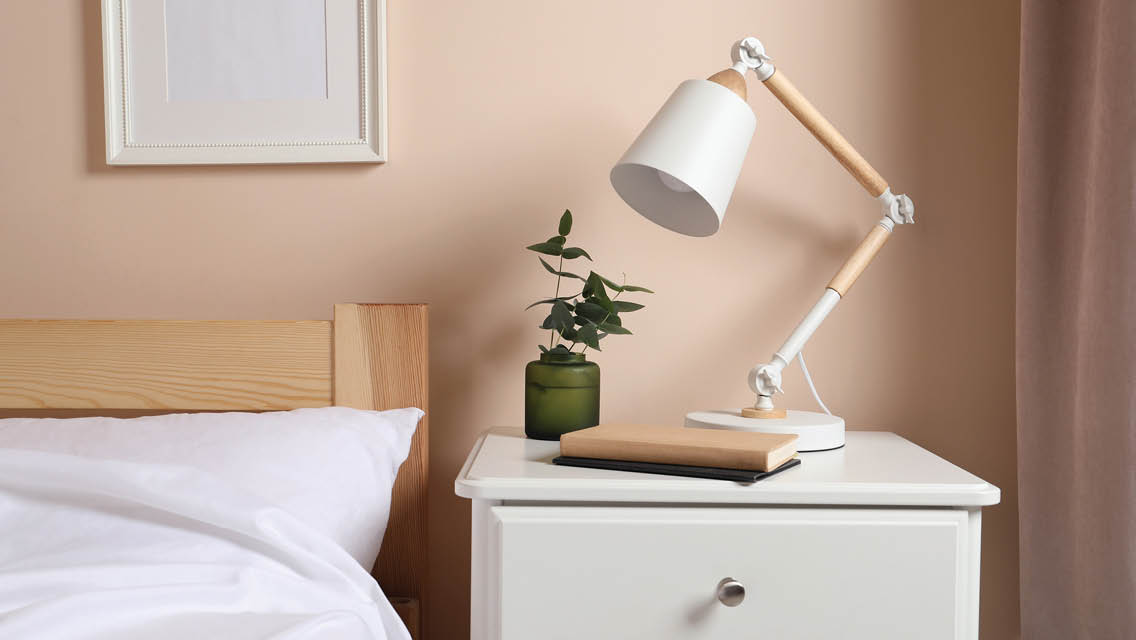
Overhead bedroom lights are too harsh for pre-sleep wind-down. Your nightstand should hold one gentle light source: a small lamp with a warm bulb (2700K or lower), a dimmable reading light, or a battery-operated candle. The key is that it creates a sunset-like glow that signals melatonin production rather than suppressing it.
Avoid blue-light-emitting devices on your nightstand. If you use an e-reader, ensure it has a warm-light mode, or better yet, keep physical books for bedtime reading.
2. Water, But Only What You’ll Drink Tonight
Hydration supports sleep quality, but a large water bottle or multiple glasses create visual noise and potential spill disasters. One small glass or a slim carafe with a matching cup is sufficient. Refill it each morning so it’s ready for the next night—not sitting stagnant for days.
3. A Notebook and Pen (Not Your Phone)
The “brain dump” is one of the most effective pre-sleep techniques. When racing thoughts threaten to keep you awake, writing them down externalises them. Your brain stops trying to remember because the information is safely stored elsewhere.
Keep a dedicated small notebook and pen—not a phone or tablet—for this purpose. The physical act of handwriting slows your thoughts and avoids the blue light and notification temptations of digital devices.
4. One Current Reading Item
One book. Not a stack of magazines, not three half-finished novels, not your Kindle loaded with 200 options. One physical book that you’re actively reading. This removes decision fatigue at bedtime and prevents the subtle guilt of abandoned books staring at you.
When you finish it, replace it. Don’t let finished books accumulate. They become clutter the moment you read the final page.
5. Your Alarm (Ideally, Not Your Phone)
If you use a traditional alarm clock, it belongs on your nightstand. If you use your phone, reconsider. Phones on nightstands are the number one source of sleep. disruption: the temptation to check notifications, the blue light if you wake at 3 AM, and the anxiety of seeing work emails before your eyes are fully open.
The best solution? Charge your phone across the room or in another room entirely. Use a dedicated alarm clock or sunrise simulator. Your nightstand will thank you, and so will your sleep quality.
What Absolutely Does Not Belong
Just as important as what you include is what you exclude. These items have no place on a sleep-supportive nightstand:
- Work materials – Laptops, papers, notebooks with to-do lists, anything that connects to your professional identity
- Multiple electronic devices – Tablets, extra phones, headphones, gaming controllers
- Food and snacks – Crumbs attract pests, wrappers create mess, and eating in bed disrupts your brain’s association between bed and sleep
- Cosmetics and skincare bottles – These belong in the bathroom. They clutter your sleep space and often contain scents that interfere with rest
- Excessive decorative objects – One small meaningful item is fine. A collection of framed photos, vases, and trinkets becomes visual noise
- Charging cables – If you must charge a device, use a single cable tucked behind the nightstand, not sprawled across the surface
- Medications (unless immediately necessary) – Daily vitamins and supplements belong in the kitchen or bathroom with your other health routines
The Decluttering Process: From Chaos to Calm
If your nightstand currently resembles a junk drawer with legs, don’t despair. The transformation takes less than 30 minutes and requires no special purchases. Here’s the step-by-step process:
Step 1: The Complete Empty-Out
Remove everything. Every item. Every drawer’s contents. Everything on top, beside, and behind. Place it all on your bed or floor where you can see it. This visual inventory is often shocking. Most people don’t realise how much has accumulated until they see it spread out.
Step 2: Sort Into Four Categories
Create four distinct piles:
- Belongs on nightstand – Items that genuinely support sleep or your morning routine
- Belongs elsewhere in home – Items that have a proper home but wandered here
- Trash or recycling – Receipts, empty bottles, broken items, expired products
- Undecided – Items you’re unsure about (limit this pile strictly)
Be ruthless with the trash category. Most nightstand clutter is garbage that never made it to the bin.
Step 3: Clean the Surface and Interior
With the nightstand empty, wipe every surface—top, sides, legs, drawer interiors, and back panel. Use a gentle cleaner appropriate for the material. This physical reset mirrors the psychological reset you’re creating. A clean, empty nightstand feels like possibility rather than burden.
Step 4: Intentional Replacement
Return only the items from your “belongs here” pile. Arrange them with breathing room between each object. If something feels cramped, remove it. The goal is spaciousness, not efficient packing.
For drawer interiors, use small organisers or boxes to separate categories: sleep aids in one section, reading materials in another. But keep the drawer mostly empty. A stuffed drawer is just hidden clutter.
Step 5: Establish the Boundary
Make a simple rule: nothing lands on the nightstand unless it serves sleep or your immediate morning routine. This boundary is what prevents future clutter accumulation. When you catch yourself placing random items there, pause and redirect them to their proper homes.
The Ripple Effects of a Clear Bedside
The benefits of a decluttered nightstand extend far beyond the bedroom. They create a cascade of positive changes throughout your daily life.
Better Sleep Onset
When your pre-sleep environment is calm and intentional, your brain transitions into sleep mode more efficiently. The absence of visual stimuli reduces cognitive arousal. The presence of sleep-supportive items (soft light, water, and a book) provides positive cues. Many people report falling asleep 10-15 minutes faster after decluttering their nightstand.
Reduced Morning Friction
Your morning begins the moment you open your eyes. If the first thing you see is chaos, your day starts with stress. If it’s a calm order, you begin from a place of control. A decluttered nightstand supports smoother morning routines because nothing blocks your path to glasses, water, or your alarm.
Improved Relationship Dynamics
For couples, nightstand clutter often becomes a source of tension. One partner’s mess encroaches on shared space. One person’s late-night scrolling lights up the room. Establishing clear, minimal nightstand standards creates respect for shared sleep space and reduces unconscious resentment.
Enhanced Mindfulness
The act of maintaining a decluttered nightstand is itself a mindfulness practice. It requires daily attention, intentional choices, and present-moment awareness. This small habit builds the same mental muscles used in larger mindfulness practices—without requiring extra time.
Stronger Sleep Associations
Sleep psychologists emphasise that your bed should be associated with only two things: sleep and intimacy. When your nightstand holds work materials, food, or entertainment devices, it blurs these boundaries. A clean nightstand reinforces the bed’s sacred purpose and strengthens your brain’s sleep triggers.
Maintaining Your Nightstand Sanctuary
Decluttering once is easy. Keeping it decluttered is the real challenge. These maintenance strategies prevent the slow creep of stuff that turns your sanctuary back into a storage unit.
The 60-Second Evening Reset
Before getting into bed, spend one minute scanning your nightstand. Remove anything that doesn’t belong. Straighten what does. This tiny ritual, performed consistently, prevents accumulation far more effectively than monthly deep cleans.
The One-In, One-Out Rule
If you add something new to your nightstand, something old must leave. This prevents gradual expansion. Want to start a new book? Finish or remove the current one first. Got a new sleep aid? Discard the old one.
The Sunday Night Audit
Once a week, during your evening wind-down, assess your nightstand with fresh eyes. Has anything crept in? Have your needs changed? This weekly check-in takes two minutes and keeps your space aligned with your current life, not your past habits.
Seasonal Refresh
With each season, reconsider your nightstand setup. Winter might call for lip balm and a heavier moisturiser. Summer might mean lighter reading and a fan remote. Adjust intentionally rather than letting items accumulate year-round.
Addressing Common Objections
When suggesting nightstand decluttering, these concerns arise frequently. Here’s how to handle them:
“But I need my phone for the alarm.”
Dedicated alarm clocks cost less than $20. Sunrise simulators, which wake you with gradually increasing light, cost more but transform your mornings. Either option removes the phone temptation while improving your wake-up experience.
“I read on my tablet before bed.”
Consider whether this is truly serving your sleep. Tablets emit blue light that suppresses melatonin. If you must use one, enable the warmest light setting, use blue light filtering, and hold it rather than propping it on your nightstand where it invites extended use.
“My nightstand has drawers—I can hide the clutter.”
Hidden clutter is still clutter. It weighs on your subconscious and makes finding what you need frustrating. Drawer organisers help, but the real solution is owning less, not organising more. If your drawers are full, you have too much bedside stuff.
“I don’t have time for this.”
The initial declutter takes 20-30 minutes. Daily maintenance takNot having to search for items, clean spills, or lie awake stressed saves you time and awake stressed pays back your investment within a week.
Conclusion:
The nightstand is a microcosm of your relationship with your environment. When it’s cluttered, it reflects—and reinforces—a life of accumulation, distraction, and unfinished business. When it’s clear and intentional, it becomes a daily reminder that you control your space, your habits, and ultimately, your rest.
You don’t need a bigger bedroom, expensive furniture, or a complete lifestyle overhaul. You need one clear surface beside your bed. You need to decide what should be the last thing you see at night and the first thing you encounter each morning. Choose wisely, maintain gently, and watch how this tiny change ripples into better sleep, calmer mornings, and a more peaceful mind.
Start tonight. Empty the surface. Keep what serves you. Remove what doesn’t. Sleep better.
About the Author: This guide was created to help you transform overlooked spaces into tools for better living. For more practical home and wellness optimisation strategies, explore our complete collection of lifestyle design resources.
Related Articles
From Vida Sana y Natural
- How to Design a Morning Routine Space That Actually Works
- How to Create a More Relaxing Home Environment
- Why Your Home Lighting Affects Your Mood More Than You Think
- How to Build a “Transition Ritual” Space Between Work and Home
- Simple Ways to Stay Consistent with Healthy Habits
- How to Build Better Routines Without Feeling Overwhelmed
- Tiny Daily Changes That Improve Long-Term Well-Being
Recommended External Reading
- What Is Sleep Hygiene? — Sleep Foundation
- How to Create the Ideal Bedroom Environment for Sleep — Healthline
