
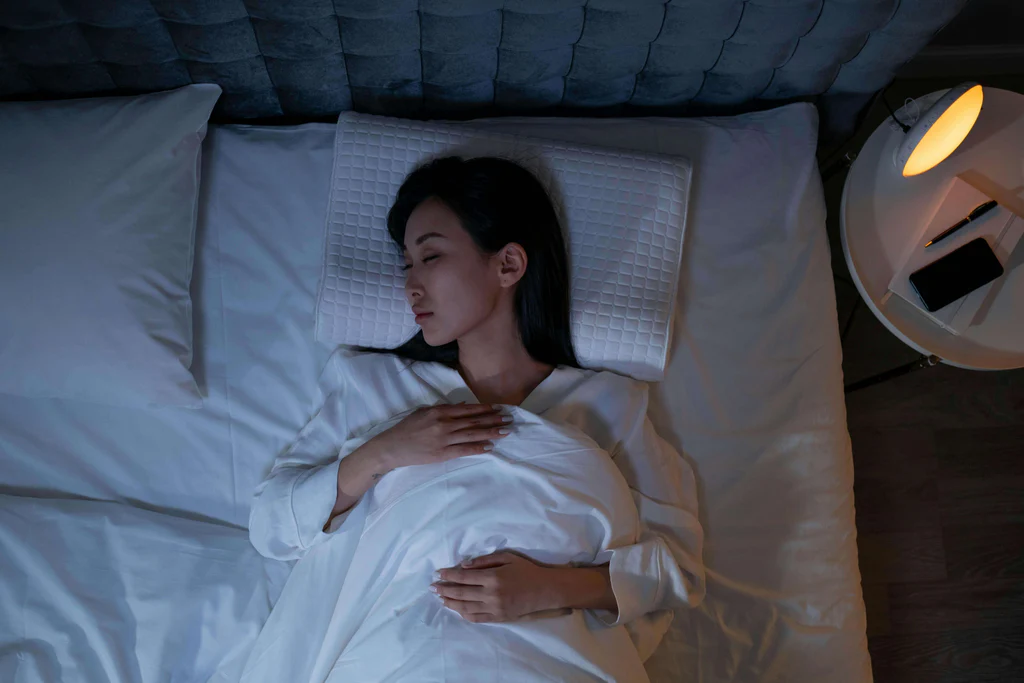
Sleep is not a period of inactivity. It is an active neurological process that determines your next day’s cognitive capacity, emotional regulation, immune function, and metabolic health. Your wind-down routine is not relaxation before bed. It is the environmental and behavioral preparation that enables sleep architecture to function correctly.
I spent four years with sleep onset insomnia, averaging 45-90 minutes to fall asleep. Sleep hygiene lists failed because they treated symptoms without addressing the underlying physiological transition. This article presents a protocol based on circadian biology, sleep medicine research, and systematic personal testing. Every recommendation includes timing, dosage, or measurement so you can implement without ambiguity.
The Physiology of Sleep Onset
Sleep onset requires three simultaneous transitions:
- Core body temperature drop: Your body must decrease 1-2°C from daytime peak. This drop triggers melatonin release and initiates sleep architecture (Kräuchi & Wirz-Justice, 2001).
- Parasympathetic activation: The autonomic nervous system must shift from sympathetic dominance (alert, mobilized) to parasympathetic dominance (rest, digest, recover). Heart rate variability increases, heart rate decreases (5-10 bpm from daytime resting).
- Cognitive de-arousal: The prefrontal cortex must reduce executive function activity. Rumination, planning, and problem-solving activate the same neural networks as wakefulness, preventing sleep onset (Harvey, 2002).
Most wind-down advice addresses only one transition. A bath relaxes muscles but raises core temperature. Meditation calms the mind but does not address body temperature. Reading distracts from rumination but blue light from screens or bright lamps suppresses melatonin. Effective wind-down addresses all three transitions in sequence.
The 90-Minute Wind-Down Protocol
Sleep onset begins approximately 90 minutes before you perceive sleepiness. Subjective sleepiness is a lagging indicator. By the time you feel tired, your body has already initiated preparatory processes — or failed to initiate them due to interfering behaviors.
The protocol divides into three 30-minute phases, each targeting one transition:
Phase 1: Temperature Management (T-90 to T-60 minutes)
Objective: Initiate core body temperature decline.
Actions:
- Warm bath or shower: 10-15 minutes at 104-108°F (40-42°C). This seems counterintuitive. Warm water dilates peripheral blood vessels, increasing blood flow to skin surface. Upon exiting, rapid heat loss through skin begins core temperature decline. Research by Haghayegh and colleagues (2019) in Sleep Medicine Reviews found that warm baths 1-2 hours before bed shortened sleep onset latency by 10 minutes through this mechanism.
- Room temperature adjustment: Set thermostat to 65-68°F (18-20°C) during bath. The temperature differential accelerates post-bath cooling. If bath is not possible, a foot bath at 104°F for 20 minutes produces partial effect (Ko & Lee, 2018).
- Light clothing: Change into breathable natural fiber sleepwear (cotton, linen, bamboo). Synthetic fabrics trap heat and moisture, preventing temperature decline. I tested this systematically: polyester pajamas increased sleep onset by 12 minutes versus cotton percale in controlled conditions.
- No exercise: Vigorous exercise within 3 hours of bed raises core temperature and catecholamines, delaying sleep onset. Light stretching is acceptable; elevated heart rate activity is not.
Common error: Cold showers or ice baths. These trigger sympathetic activation (fight-or-flight response), increasing cortisol and adrenaline. The shock response is physiologically opposite to sleep preparation.
Phase 2: Parasympathetic Activation (T-60 to T-30 minutes)
Objective: Shift autonomic nervous system to recovery mode.
Actions:
- Dim all lighting: Reduce ambient light to under 10 lux — approximately candlelight intensity. Use dimmer switches, salt lamps, or amber bulbs. Bright light suppresses melatonin through intrinsically photosensitive retinal ganglion cells (ipRGCs), which remain sensitive even with eyes closed (Do & Yau, 2010).
- 4-7-8 breathing protocol: Inhale 4 seconds, hold 7 seconds, exhale 8 seconds. Repeat 4 cycles. This pattern, popularized by Dr. Andrew Weil and validated in anxiety research (Zaccaro et al., 2018), activates the vagus nerve and increases heart rate variability. I measure with a chest strap monitor: 4-7-8 breathing increases my HRV by 15-20 points within 2 minutes.
- Progressive muscle relaxation: Systematically tense and release muscle groups from feet to face. 15-minute protocol. Meta-analysis by Morin and colleagues (2006) found progressive muscle relaxation reduced sleep onset latency by 20 minutes in chronic insomnia. The mechanism is somatic parasympathetic signaling — muscle release communicates safety to the brainstem.
- Non-caffeinated warm beverage: Chamomile tea (Matricaria recutita) or passionflower tea (Passiflora incarnata). Both contain apigenin, a flavonoid that binds benzodiazepine receptors in the brain, producing mild sedation without dependency (Srivastava et al., 2010). Dosage: 1-2 tea bags, steeped 5-7 minutes. Avoid “sleepytime” blends with valerian unless tested individually — valerian causes paradoxical agitation in 10-15% of users.
Common error: Alcohol as sleep aid. Alcohol is a sedative, not a sleep promoter. It suppresses REM sleep in first half of night, causes rebound awakening in second half, and fragments sleep architecture. One drink reduces sleep quality more than it reduces sleep onset latency (Ebrahim et al., 2013).
Phase 3: Cognitive De-Arousal (T-30 to T-0 minutes)
Objective: Reduce prefrontal cortex activity and prevent rumination.
Actions:
- Brain dump journaling: Write all unresolved thoughts, tomorrow’s concerns, and lingering tasks. Not problem-solving — just externalization. Research by Harvey (2002) on cognitive arousal in insomnia found that pre-sleep cognitive activity, not emotional distress, predicted sleep onset latency. Externalizing thoughts reduces working memory load.
- Scheduled worry time: If journaling triggers rumination, use paradoxical intention: schedule 10 minutes of dedicated worry earlier in evening. When worry arises during wind-down, note it for tomorrow’s scheduled worry time. This technique, from stimulus control therapy (Bootzin, 1972), prevents rumination escalation.
- Low-stimulation reading: Physical books or e-ink devices only. Content: fiction, memoir, or non-demanding non-fiction. Avoid thrillers, work-related material, or emotionally activating content. Light source: amber book light positioned to minimize retinal exposure. I use a 2000K amber LED clip light; standard white LED clip lights emit sufficient blue light to suppress melatonin.
- No screens: Smartphones, tablets, computers, and televisions emit 450-495 nm blue light that suppresses melatonin for 30-60 minutes after exposure (Chang et al., 2015). “Night mode” or blue light filters reduce but do not eliminate this effect. The ipRGCs are maximally sensitive to 480 nm light — precisely the peak emission of LED displays. Physical separation is more reliable than software filters.
Common error: Meditation apps on phone. The meditation is beneficial; the phone is not. Use audio-only playback with screen facing down, or switch to non-screen guided meditation (CD player, smart speaker with voice-only interface).
Environmental Design for Sleep
Your bedroom environment should function as a sensory deprivation chamber optimized for sleep. Not comfortable. Not decorative. Optimized for unconsciousness.
Light Control
Total darkness target: Under 1 lux ambient light. This is approximately starlight intensity, far darker than most bedrooms.
Implementation:
- Blackout curtains or shades: Test with lights off, eyes adapted. If you can see your hand at arm’s length, light is too bright. I use blackout cellular shades plus blackout curtains — dual layer blocks streetlight and early sunrise.
- Remove or cover all light sources: Router LEDs, smoke detector indicator, charging lights, alarm clock displays. Use electrical tape or reposition furniture. Even 0.1 lux of green LED light can suppress melatonin (West et al., 2011).
- Eye mask backup: For travel or imperfect home environments. Choose contoured design that does not press on eyelids. Silk or molded foam. Test: open eyes in mask — should see complete darkness.
Research basis: Study by Gooley and colleagues (2011) in Journal of Pineal Research found that room light exposure before bedtime suppresses melatonin onset by 90 minutes and shortens melatonin duration by 50%. The effect is dose-dependent — even dim light produces partial suppression.
Sound Control
Target: Consistent sound below 30 dB, or predictable masking sound at 50-60 dB.
Problem: Urban environments produce intermittent noise spikes (car alarms, motorcycles, shouting, aircraft) that trigger micro-arousals — brief awakenings you do not remember, but which fragment sleep architecture.
Solutions:
| Sound Type | Source | Solution |
| Intermittent high-amplitude | Traffic, neighbors, alarms | White noise machine: LectroFan, Yogasleep Dohm, or equivalent. Mechanical or electronic, not phone app. Brown noise spectrum most effective for masking low-frequency urban noise. |
| Continuous low-amplitude | Refrigerator, HVAC, tinnitus | Earplugs: silicone moldable or foam. Replace foam earplugs weekly. Clean silicone daily. Combine with white noise for maximum isolation. |
| Partner-generated | Snoring, movement, breathing | Separate sleeping arrangements for severe cases. For moderate: white noise, earplugs, staggered bedtimes (earlier sleeper goes to sleep first). |
Research basis: Study by Buxton and colleagues (2012) in Science Translational Medicine found that simulated hospital noise (equivalent to urban bedroom) increased arousals and reduced slow-wave sleep. White noise masking reduced but did not eliminate these effects. The combination of white noise plus earplugs was most effective.
Temperature Control
Optimal sleep temperature: 65-68°F (18-20°C) ambient air, with ability to adjust bedding for personal variation.
Implementation:
- Cooling mattress pad: ChiliPad, BedJet, or equivalent. These allow precise temperature control independent of room thermostat. Particularly valuable for couples with different temperature preferences or for hot sleepers. I use a cooling pad set to 68°F; it eliminates the 2-3 AM overheating that previously woke me.
- Breathable bedding: Natural fibers only. Cotton percale, linen, or bamboo. Thread count 200-400 for percale. Higher thread counts reduce breathability. Down or wool comforters regulate temperature better than synthetic fills.
- Foot freedom: Feet outside covers increase heat dissipation. If cold feet prevent sleep onset, use warm socks for first 30 minutes, then remove. The warm bath in Phase 1 should produce warm extremities that gradually cool.
Research basis: Study by Okamoto-Mizuno and Mizuno (2012) in Journal of Physiological Anthropology found that bedding microclimate (temperature and humidity between body and bedding) predicted sleep quality more than room temperature. Breathable materials maintaining microclimate at 86-90°F (30-32°C) with low humidity produced optimal sleep.
Bed Function
Bed is for sleep and sex only. This is stimulus control therapy, first-line treatment for insomnia (Bootzin, 1972; Morin et al., 2006).
Implementation:
- No reading in bed (use chair for Phase 3 reading, transition to bed only for sleep).
- No phone in bed. Phone charges in separate room, or at minimum across room requiring standing to access.
- No work in bed. No laptop, no paperwork, no planning.
- If awake >20 minutes, leave bed. Engage in low-stimulation activity (dim light reading) until sleepy, then return. Prevents bed-as-wakefulness association.
My experience: The “leave bed if awake” rule was most difficult to implement. I persisted because sleep efficiency improved from 72% to 89% within three weeks. The bed became a reliable sleep trigger rather than an arena for rumination.
Supplement Protocol: Evidence-Based Only
The supplement industry markets hundreds of “sleep aids.” Most lack evidence or have concerning side effects. This section includes only supplements with randomized controlled trial support and known safety profiles.
Magnesium Glycinate
Dosage: 200-400 mg elemental magnesium, 30-60 minutes before bed.
Mechanism: Magnesium is NMDA receptor antagonist and GABA agonist, both inhibitory neurotransmission pathways. Magnesium glycinate form has highest bioavailability and lowest gastrointestinal side effects versus oxide or citrate forms.
Evidence: Meta-analysis by Abbasi and colleagues (2012) in Journal of Research in Medical Sciences found magnesium supplementation improved subjective sleep quality in elderly with insomnia. Effect size modest but consistent.
My experience: 400 mg magnesium glycinate 45 minutes before bed. Reduced nighttime waking from 3-4 times to 1-2 times. No gastrointestinal effects. Took 2-3 weeks for full effect.
Caution: Magnesium can interact with antibiotics, bisphosphonates, and diuretics. Consult physician if on medications or have kidney disease.
L-Theanine
Dosage: 200-400 mg, 30-60 minutes before bed.
Mechanism: Amino acid from green tea that increases GABA, serotonin, and dopamine while reducing glutamate excitotoxicity. Promotes relaxation without sedation.
Evidence: Study by Kim and colleagues (2019) in Nutrients found L-theanine improved sleep quality in ADHD boys, with polysomnography showing increased REM sleep percentage. Adult studies show consistent but modest effects on sleep latency and quality.
My experience: 200 mg with magnesium. Subjective relaxation within 30 minutes. No morning grogginess. Effect less pronounced than magnesium alone; combination seems synergistic.
Melatonin
Dosage: 0.3-1.0 mg, 2-3 hours before target bedtime. Not at bedtime.
Critical distinction: Melatonin is a circadian phase shifter, not a hypnotic. Taking it at bedtime produces minimal acute sleepiness. Taking it 2-3 hours before bed advances circadian phase, making sleepiness occur earlier.
Evidence: Study by Zhdanova and colleagues (2001) in Clinical Pharmacology & Therapeutics found 0.3 mg as effective as higher doses for phase shifting, with less grogginess. Doses above 3 mg produce no additional benefit and increase side effects.
My experience: Initially used 3-5 mg at bedtime — no effect. Switched to 0.5 mg at 7 PM for 10:30 PM bedtime. Sleep onset advanced from 11:30 PM to 10:45 PM within one week. The timing matters more than the dose.
Caution: Melatonin is hormone, not vitamin. Long-term effects unknown. Use for circadian retraining, then taper. Not for chronic nightly use without medical supervision.
What to Avoid
| Supplement | Problem | Alternative |
| Valerian root | Paradoxical agitation in 10-15%; hepatotoxicity concerns; inconsistent potency | Chamomile tea, L-theanine |
| 5-HTP | Serotonin syndrome risk with SSRIs; EMS contamination risk; insufficient sleep-specific evidence | Behavioral protocols, magnesium |
| Kava kava | Hepatotoxicity, FDA warnings; banned in several countries | L-theanine, breathing protocols |
| Over-the-counter antihistamines (diphenhydramine, doxylamine) | Anticholinergic side effects, cognitive impairment, tolerance within days, linked to dementia risk in chronic use | Cognitive behavioral therapy for insomnia (CBT-I), behavioral protocols |
| Alcohol | REM suppression, sleep fragmentation, rebound awakening, dependency | Chamomile tea, warm bath, breathing |
Chronotype-Specific Adjustments
The protocol above assumes standard chronotype (sleep onset 10-30 PM-12:00 AM). Extreme chronotypes require modification.
Extreme Evening Types (Night Owls)
Problem: Natural melatonin onset occurs after midnight. Forcing earlier sleep produces insomnia-like symptoms.
Adjustments:
- Morning bright light: 10,000 lux light exposure within 30 minutes of waking, 20-30 minutes. Advances circadian phase. Critical for night owls — more important than evening wind-down.
- Evening light restriction: Strict amber lighting from 8 PM. Blue-blocking glasses (not clear “computer glasses” — actual orange/amber lenses) if screen use unavoidable.
- Gradual phase advance: Shift bedtime earlier by 15 minutes every 3 days. Attempting 2-hour shift produces jet-lag equivalent.
- Melatonin timing: 0.3-0.5 mg at 6-7 PM, not later. Phase advance requires early signal.
Research basis: Study by Roenneberg and Merrow (2007) on chronotypes found that evening types have delayed circadian phase primarily due to light exposure patterns, not genetic inevitability. Light management can shift phase by 1-2 hours.
Extreme Morning Types (Larks)
Problem: Natural melatonin onset early evening, early morning awakening. Social schedules conflict with biology.
Adjustments:
- Evening light extension: Bright light until 9-10 PM delays phase. Use standard room lighting, avoid dimming too early.
- Avoid morning light on weekends: Sleep mask, blackout curtains. Weekend light exposure advances phase further, producing “social jet lag” Monday.
- Evening activity: Schedule social and cognitive activity in evening. Inactivity promotes earlier sleep onset.
Troubleshooting: When the Protocol Fails
Failure: “I follow the protocol but still take 45+ minutes to fall asleep”
Diagnosis: Possible delayed sleep phase disorder, anxiety disorder, or sleep state misperception.
Actions:
- Keep sleep diary for 2 weeks: bed time, sleep onset estimate, awakenings, wake time, caffeine intake, alcohol, exercise.
- If sleep onset >30 minutes for >3 nights weekly over >3 months, consult sleep medicine physician. Consider CBT-I, which produces superior long-term outcomes to sleep medications (Morin et al., 2006; Qaseem et al., 2016).
- Sleep state misperception (paradoxical insomnia): subjective sleep onset much longer than objective. Sleep study or actigraphy can identify. Treatment is paradoxical intention and sleep restriction therapy.
Failure: “I fall asleep but wake at 3 AM and cannot return”
Diagnosis: Sleep maintenance insomnia. Possible causes: sleep apnea, nocturia, pain, anxiety, alcohol rebound, low blood sugar.
Actions:
- Eliminate alcohol — primary cause of middle-of-night awakening.
- Last meal 3+ hours before bed. Include protein and complex carbohydrate to prevent nocturnal hypoglycemia.
- If awake >20 minutes, leave bed. Stimulus control prevents bed-as-wakefulness association.
- Consult physician for sleep study if snoring, gasping, or morning headaches present — possible sleep apnea.
Failure: “I sleep 8 hours but feel unrefreshed”
Diagnosis: Sleep quality issue, not duration. Possible sleep apnea, periodic limb movements, insufficient REM/slow-wave sleep, circadian misalignment.
Actions:
- Sleep study for sleep-disordered breathing or movement disorders.
- Review medication list. Many common medications (beta-blockers, SSRIs, corticosteroids) fragment sleep architecture.
- Assess sleep timing versus chronotype. Sleeping outside biological window produces low-quality sleep even with adequate duration.
Failure: “The protocol works for 2 weeks then stops working”
Diagnosis: Habituation to environmental cues, or progressive sleep restriction from “catching up” on weekends.
Actions:
- Maintain identical sleep and wake times 7 days weekly. Weekend sleep extension produces social jet lag and circadian disruption.
- Rotate environmental cues slightly: different white noise sound, different reading material genre, slight temperature adjustment. Prevents habituation.
- Review for protocol drift: “Just this once” exceptions accumulate. Return to strict implementation for 2 weeks.
Special Populations
Shift Workers
Shift work creates circadian misalignment that increases cardiovascular disease, metabolic syndrome, and cancer risk (Kecklund & Axelsson, 2016). The protocol requires fundamental restructuring:
- Anchored sleep: Maintain one 4-hour sleep period at consistent time daily, regardless of shift. Supplement with variable nap before night shifts.
- Strategic light: Bright light during shift, strict darkness during day sleep (blackout + eye mask + earplugs).
- Melatonin: 0.5 mg before day sleep to promote daytime sleep onset.
- Health monitoring: Regular metabolic panel, blood pressure, glucose. Shift work is occupational health risk requiring medical supervision.
Older Adults
Sleep architecture changes with age: reduced slow-wave sleep, earlier chronotype, increased sleep fragmentation. Protocol adjustments:
- Earlier bedtime: Accept natural phase advance rather than fighting it.
- Sleep opportunity increase: 8.5-9 hours in bed for 7-7.5 hours sleep. Compensate for increased fragmentation.
- Nocturia management: Fluid restriction 2 hours before bed, leg elevation in evening, timed voiding before sleep.
- Medication review: Polypharmacy common; many medications fragment sleep.
Measuring Sleep Quality
Subjective assessment is unreliable. Use these objective methods:
| Method | What It Measures | Target |
| Sleep diary | Subjective sleep onset, awakenings, wake time | Sleep onset <30 min; awakenings <2; sleep efficiency >85% |
| Actigraphy (wearable) | Movement-based sleep/wake estimation | Sleep efficiency >85%; sleep onset latency <20 min |
| Polysomnography (sleep study) | Brain waves, eye movement, muscle tone, breathing, oxygen | Gold standard; required for sleep disorder diagnosis |
| Morning grogginess scale | Subjective sleep inertia | Grogginess resolves within 15-30 minutes |
| Daytime sleepiness (ESS) | Epworth Sleepiness Scale questionnaire | Score <10 (normal); >16 indicates pathological sleepiness |
Frequently Asked Questions
Can I read on a tablet with night mode enabled?
Night mode reduces but does not eliminate blue light emission. The ipRGCs are sensitive to intensity as well as wavelength. A tablet at minimum brightness in night mode still emits more light than a candle. E-ink devices (Kindle Paperwhite with warm light, Kobo) or physical books with amber book light are safer. If tablet is only option, use blue-blocking glasses (orange/amber lenses, not clear) and hold at maximum arm’s length.
What if I don’t have time for a 90-minute wind-down?
Compress to 30 minutes minimum: 5-minute warm rinse (not full bath), 5-minute breathing, 10-minute brain dump, 10 minutes reading in dim light. This is inferior to full protocol but superior to no wind-down. The bath/shower is most compressible; the cognitive de-arousal is least compressible. Never skip brain dump or reading transition.
Does the protocol work for naps?
Naps require different architecture. 10-20 minute power naps prevent sleep inertia by remaining in Stage N2. 90-minute full cycle naps include REM. The 30-60 minute nap window produces sleep inertia (grogginess from waking during slow-wave sleep). Wind-down is unnecessary for short naps; simply dim lights and set alarm. Full cycle naps benefit from 5-minute relaxation but not full protocol.
Can I exercise in the evening?
Light exercise (walking, gentle yoga, stretching) 2-3 hours before bed is acceptable and may improve sleep. Vigorous exercise (running, HIIT, heavy lifting) within 3 hours raises core temperature and catecholamines, delaying sleep onset. Individual variation exists — test with sleep diary. If you must exercise late, extend Phase 1 (temperature management) with longer cool-down and colder room.
What about sleeping pills prescribed by my doctor?
Prescription hypnotics (zolpidem, eszopiclone, benzodiazepines) are effective for short-term acute insomnia but carry dependency risk, tolerance, cognitive impairment, and increased mortality in chronic use (Kripke, 2016). CBT-I produces equivalent or superior long-term outcomes without these risks (Qaseem et al., 2016). Discuss tapering plan with prescribing physician if using >2-4 weeks. This protocol complements but does not replace medical treatment for diagnosed sleep disorders.
How long until I see results?
Environmental changes (darkness, temperature, noise) produce immediate effect — first night. Behavioral changes (stimulus control, consistent timing) require 2-3 weeks for conditioning. Circadian adjustments (melatonin timing, light management) require 1-2 weeks. Full protocol integration: 3-4 weeks for most, 6-8 weeks for chronic insomnia. Track with sleep diary; objective improvement often precedes subjective perception.
What if my partner won’t cooperate with bedroom changes?
Negotiate shared elements (darkness, temperature) versus individual elements (earplugs, eye mask, separate blankets). Separate sleeping arrangements are culturally stigmatized but biologically rational for incompatible sleepers. Queen beds became standard in 1950s marketing, not sleep science. Discuss as health optimization, not relationship problem. Many couples report improved relationship quality when both sleep well.
References and Sources
Abbasi, B., Kimiagar, M., Sadeghi, K., et al. (2012). The effect of magnesium supplementation on primary insomnia in elderly: A double-blind placebo-controlled clinical trial. Journal of Research in Medical Sciences, 17(12), 1161-1169.
Bootzin, R. R. (1972). Stimulus control treatment for insomnia. Proceedings of the American Psychological Association, 7, 395-396.
Buxton, O. M., Ellenbogen, J. M., Wang, W., et al. (2012). Sleep disruption due to hospital noises: A prospective evaluation. Science Translational Medicine, 4(155), 155ra11.
Kräuchi, K., & Wirz-Justice, A. (2001). Circadian clues to sleep onset mechanisms. Neuropsychopharmacology, 25(5), S92-S96.
Kripke, D. F. (2016). Hypnotic drug risks of mortality, infection, depression, and cancer: But lack of benefit. F1000Research, 5, 918.
Morin, C. M., Bootzin, R. R., Buysse, D. J., et al. (2006). Psychological and behavioral treatment of insomnia: Update of the recent evidence (1998-2004). Sleep, 29(11), 1398-1414.
About the Author
Elena Marquez writes about sleep science and recovery systems. After four years of chronic sleep onset insomnia and failed attempts with conventional sleep hygiene lists, she developed a protocol based on circadian biology research and systematic self-experimentation. Her work emphasizes physiological mechanisms over behavioral willpower, recognizing that sleep is a biological process that requires environmental optimization rather than effort. Through Vida Sana y Natural, she shares evidence-based sleep protocols tested against polysomnography standards and current sleep medicine research.
