The good news is that something as simple as your breath can help bring calm back into your day. Mindful breathing exercises are easy techniques that help slow your breathing, relax your nervous system, and improve focus. You don’t need special equipment or a quiet room for hours. Even a few minutes can make a difference.
In this guide, you’ll learn practical breathing techniques that are easy to follow, even if you’ve never tried them before. You’ll also understand how breathing affects stress, how to use it in daily life, and how to build a simple habit that supports mental calmness.
1. What Mindful Breathing Really Means
Mindful breathing simply means paying attention to your breath without trying to control it too much at first. Instead of breathing automatically while your mind is distracted, you gently focus on how air moves in and out of your body.
This practice helps bring your attention back to the present moment. Many people find that when they focus on breathing, their thoughts slow down naturally. It is not about stopping thoughts completely but about noticing them without getting carried away.
Mindful breathing is often used in stress management, meditation, and relaxation training. It is one of the simplest ways to reconnect with your body when life feels overwhelming.
2. Why Breathing Affects Stress and Emotions
Your breathing and nervous system are closely connected. When you are stressed, your body activates the “fight or flight” response. This causes a faster heart rate and shallow breathing. Your brain then interprets this as more stress, creating a cycle.
Slow and controlled breathing sends a signal to your brain that you are safe. This helps activate the “rest and digest” system, which lowers stress levels and helps you feel calmer.
| Breathing Pattern | Body Response |
|---|---|
| Fast, shallow breathing | Increased stress and anxiety |
| Slow, deep breathing | Relaxation and calmness |
Understanding this connection helps explain why simple breathing exercises can have such a powerful effect on your mood.
3. Basic Mindful Breathing Technique
This is the easiest exercise to start with. You can do it anywhere—sitting, standing, or lying down.
Steps:
- Close your eyes if comfortable.
- Inhale slowly through your nose for 4 seconds.
- Hold for 1–2 seconds.
- Exhale gently through your mouth for 6 seconds.
- Repeat for 2–5 minutes.
4. The 4-7-8 Breathing Method
The 4-7-8 technique is a structured breathing pattern often used for relaxation and sleep. It helps slow down racing thoughts and reduces physical tension.
How it works:
- Inhale through the nose for 4 seconds.
- Hold your breath for 7 seconds.
- Exhale slowly for 8 seconds.
5. Box Breathing for Focus
Box breathing is commonly used by athletes and professionals to improve focus and stay calm under pressure. It follows a simple square pattern.
| Step | Duration |
|---|---|
| Inhale | 4 seconds |
| Hold | 4 seconds |
| Exhale | 4 seconds |
| Hold | 4 seconds |
This method works well before exams, meetings, or stressful conversations.
6. Diaphragmatic Breathing Explained
Also called belly breathing, this technique uses the diaphragm instead of shallow chest breathing. It helps improve oxygen flow and reduces tension in the upper body.
How to practise:
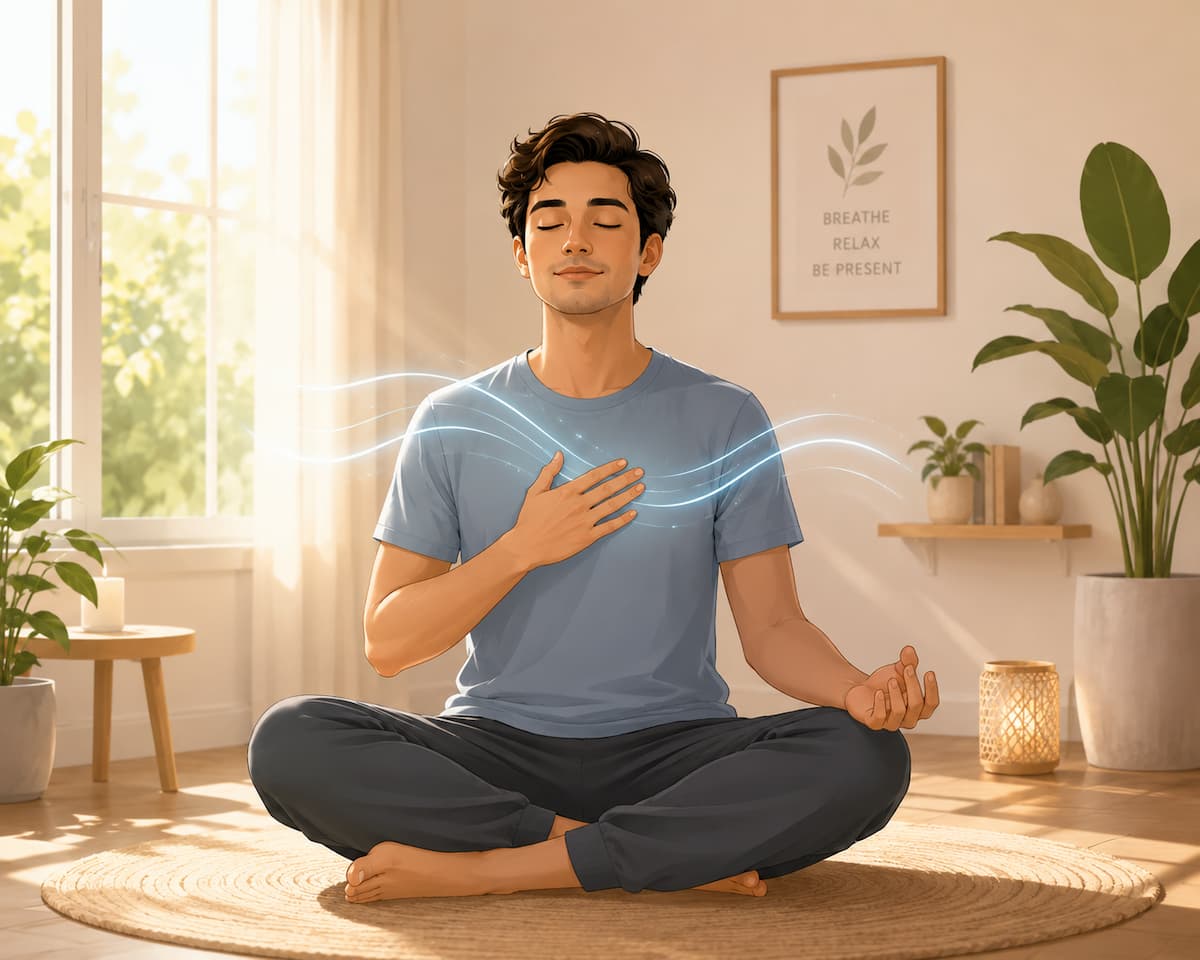
- Place one hand on your chest and one on your stomach.
- Inhale slowly through your nose.
- Let your stomach rise, not your chest.
- Exhale slowly and feel your stomach fall.
With practice, this becomes your natural breathing pattern, even when you are not doing exercises.
7. Using Breathing in Daily Life
Mindful breathing is most effective when used throughout the day, not just during practice sessions.
- Before starting work or study
- While waiting in traffic
- Before replying to stressful messages
- During short breaks
- Before sleep
8. Common Mistakes to Avoid
- Trying to force deep breathing
- Expecting instant results
- Practicing only during stress
- Holding breath too tightly
- Ignoring posture
Mindful breathing works best when it is gentle and consistent.
9. Breathing for Better Sleep
Many people struggle with racing thoughts at night. Slow breathing helps the body shift into a relaxed state before sleep.
Try lying down and focusing on long, slow exhalations. Making the exhale longer than the inhale helps signal relaxation to the brain.
10. Breathing for Anxiety Moments
During anxious moments, breathing often becomes fast and irregular. Using a simple technique can help regain control quickly.
Focus on slowing your exhale first. This is the fastest way to calm your nervous system.
- Inhale normally
- Exhale slowly for longer than the inhale
- Repeat for 1–3 minutes
11. Building a Daily Practice
Consistency is more important than duration. A few minutes daily is more effective than long sessions once in a while.
Simple daily plan:
- Morning: 2 minutes of basic breathing
- Afternoon: 1 minute reset
- Night: 3–5 minutes before sleep
Over time, your body learns to stay calmer even in stressful situations.
FAQs
1. How long should I do mindful breathing daily?
Even 5–10 minutes per day can be effective. Beginners can start with just 2 minutes and gradually increase the time. The key is consistency rather than duration. Short daily practice helps train your body to respond more calmly to stress over time.
2. Can mindful breathing reduce anxiety?
Mindful breathing can help reduce physical symptoms of anxiety such as rapid heartbeat and shallow breathing. While it is not a cure, it is a helpful tool for managing stress responses and calming the nervous system during anxious moments.
3. What is the best time to practise breathing exercises?
There is no fixed time. Morning practice helps set a calm tone for the day, while evening practice helps with relaxation and sleep. You can also use breathing techniques during stressful situations whenever needed.
4. Do I need a quiet place for breathing exercises?
A quiet place helps beginners focus, but it is not required. With practice, you can do mindful breathing in busy environments like offices, public transport, or even during conversations.
5. Why do I feel lightheaded sometimes?
Lightheadedness can happen if you breathe too deeply or too quickly. Slow down your breathing and avoid forcing large breaths. Gentle, natural breathing is more effective than exaggerated inhaling or exhaling.
6. Can children practise mindful breathing?
Yes, children can benefit from simple breathing exercises. Short, playful sessions like “smell the flower, blow the candle” can help them understand breathing in an easy and engaging way.
7. How quickly does mindful breathing work?
Some people feel calmer within a few minutes, while others notice gradual improvements over days or weeks. The effects become stronger with regular practice as your nervous system becomes more balanced.
Conclusion
Mindful breathing is one of the simplest yet most powerful tools for managing everyday stress. It does not require special training or equipment, and it can be done almost anywhere. By practising regularly, you can train your body to respond more calmly to stressful situations and improve your overall sense of balance.
Start small, stay consistent, and allow yourself to build the habit naturally. Over time, even a few mindful breaths can make a noticeable difference in how you feel throughout the day.
References
- American Psychological Association (APA) – https://www.apa.org
- National Institutes of Health (NIH) – https://www.nih.gov
- Harvard Health Publishing – https://www.health.harvard.edu
- National Center for Complementary and Integrative Health – https://www.nccih.nih.gov
