
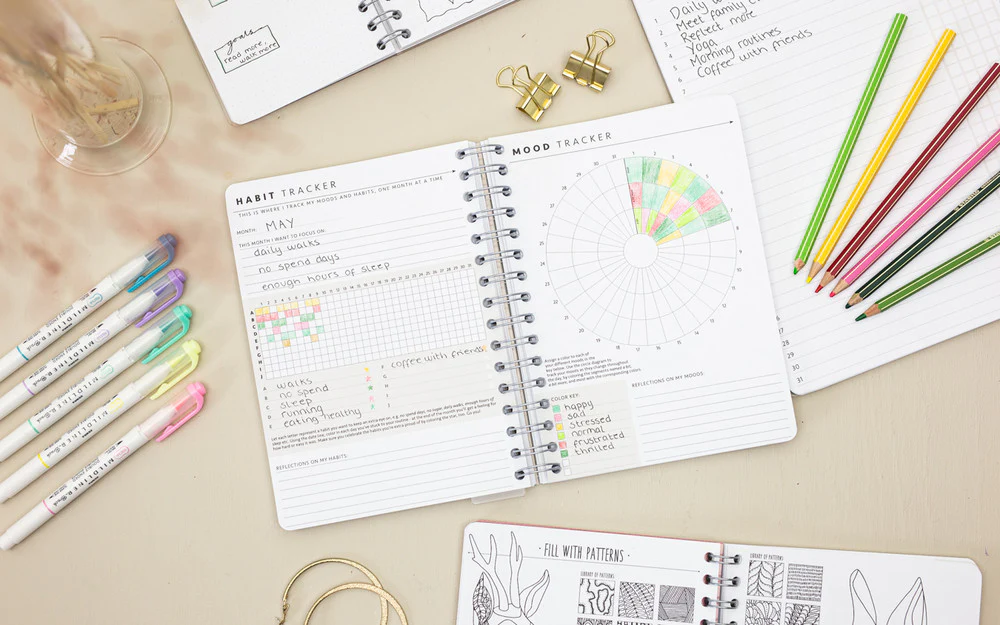
A balanced, realistic guide to using habit tracking as a supportive tool — without turning your wellness routine into pressure, guilt, or perfectionism.
Habit tracking can be incredibly helpful. It shows what you are actually doing, not just what you hope to do. A simple tracker can show patterns in your sleep, movement, water intake, screen time, reading, meditation, meals, or morning routine. It can help you stay consistent, notice progress, and make better choices.
But habit tracking can also become stressful when it turns into a daily scorecard for your self-worth. What begins as motivation can slowly become pressure. Missing one day can feel like failure. A blank space on your tracker can ruin your mood. Instead of helping your life feel calmer and healthier, tracking can make your routine feel rigid, obsessive, or emotionally exhausting.
The goal is not to track everything forever. The goal is to use habit tracking as a gentle awareness tool. When done well, it helps you understand yourself without judging yourself. It gives feedback, not punishment. It supports consistency but still leaves room for real life.
Why Habit Tracking Works
Habit tracking works because it makes behaviour visible. Many daily actions happen automatically. You may think you drink enough water, move regularly, or sleep on time, but your actual pattern may look different. Tracking helps turn vague intentions into something concrete.
Behaviour change research often includes self-monitoring, goal setting, prompts, cues, and feedback as useful tools. These methods work because they reduce guesswork. Instead of wondering why you feel stuck, you can look at your patterns and make a small adjustment.
For example, you may notice that you only stretch on days when your yoga mat is already visible. You may realise that your reading habit fails when your phone is next to your bed. You may see that you walk more when you do it after lunch instead of waiting until evening.
In this way, habit tracking is not just about counting. It is about learning. The tracker helps you ask: What makes this habit easier, and what makes it harder?
When Habit Tracking Becomes Too Much
Tracking becomes unhealthy when it creates more stress than clarity. If you feel anxious about missing a day, constantly check your app, compare your streaks to others, or feel guilty when life interrupts your routine, your tracking system may need to be simplified.
A good tracker should help you build awareness. An unhealthy tracker can make you feel controlled by numbers, streaks, and perfect checkmarks. This is especially common when people track too many habits at once or treat every habit as equally important.
Healthy habits are meant to support your life. They should not become another source of pressure. If your tracker makes you feel like you are constantly behind, it is time to change the system.
The “Minimum Useful Tracking” Rule
One of the best ways to avoid obsession is to follow the minimum useful tracking rule. This means you only track what gives you helpful information. You do not need to track every glass of water, every step, every minute of sleep, every mood shift, every meal, and every thought.
Start by choosing one to three habits that matter most to you right now. These should connect to your current stage of life. If you are mentally tired, track sleep, screen breaks, or evening wind-down. If you want steadier energy, track breakfast, hydration, or movement. When feeling overwhelmed, consider tracking pauses, journaling, or decluttering.
The more habits you track, the more mental weight you create. A smaller tracker is easier to maintain and less likely to become obsessive.
Choose the Right Tracking Style for Your Personality
Not everyone needs the same type of habit tracker. Some people love checkboxes. Others feel pressured by them. Some enjoy apps and reminders. Others prefer paper because it feels calmer. The best tracker is the one that supports you without making you feel watched.
| Tracking Style | Best For | Use With Care If |
|---|---|---|
| Checkbox Tracker | Simple daily habits and visual progress | You feel bad seeing empty boxes |
| Weekly Reflection | People who dislike daily pressure | You need daily reminders to stay consistent |
| Habit App | Reminders, streaks, and quick logging | You become too focused on notifications or streaks |
| Calendar Dots | Seeing patterns without too much detail | You need deeper notes about your habits |
| Mood + Habit Notes | Understanding emotional patterns | You tend to overanalyze your feelings |
If you are prone to perfectionism, avoid trackers that make streaks the main focus. A streak can motivate some people, but it can also make them feel like everything is ruined after one missed day.
Track Patterns, Not Perfection
The healthiest way to track habits is to search for patterns. Instead of asking, “Did I do this perfectly every day?” ask, “What does this week show me?”
Maybe you meditated three out of seven days. That is not failure. That is information. Which three days worked? What made them easier? Were they mornings? Were they days when your phone was away? Were they days when you had fewer obligations?
This shift changes the emotional tone of tracking. You stop using the tracker as proof that you are good or bad. You start using it as a map.
Use Flexible Targets Instead of All-or-Nothing Goals
All-or-nothing goals often create obsession because they leave no room for normal life. If your goal is “exercise for 45 minutes every day”, then a busy day feels like failure. A flexible target gives you options.
Try using three levels:
- Minimum: The smallest version of the habit, such as two minutes of stretching.
- Standard: The normal version, such as a 20-minute walk.
- Bonus: The extra version, such as a full workout or long walk.
This method keeps momentum alive without forcing perfection. On low-energy days, the minimum version still counts. This matters because consistency is often built through repetition, not intensity.
Do a Weekly Review Instead of Constant Checking
Daily tracking can be useful, but constant checking can create stress. A weekly review gives you space to step back and notice the bigger picture.
At the end of the week, ask yourself three simple questions:
- Which habit felt easiest this week?
- Which habit felt hardest, and why?
- What small adjustment would make next week easier?
This keeps tracking practical. You are not just collecting checkmarks. You are learning how your real life works. Maybe your morning habit needs to move to lunchtime. Maybe your evening routine needs to start earlier. Maybe one habit should be paused for now.
A weekly review also helps prevent emotional overreaction to one missed day. One day is not the story. The pattern is the story.
Know When to Stop Tracking a Habit
You do not need to track a habit forever. In fact, the purpose of tracking is often to build awareness until the habit becomes more natural. Once a habit feels stable, you can stop tracking it and use your attention somewhere else.
Consider stopping or pausing a tracker when:
- The habit feels automatic most of the time.
- The tracker is no longer teaching you anything useful.
- You feel guilty or tense every time you open it.
- Your priorities have changed.
- You are tracking out of fear, not usefulness.
A Gentle Habit Tracking Method You Can Try
If you want a simple system, try this balanced method for the next two weeks:
- Choose only three habits.
- Write a minimum version for each one.
- Track with a simple check, dot, or short note.
- Avoid judging missed days.
- Review once per week.
- Adjust the habit instead of blaming yourself.
For example, your tracker might include: drink water in the morning, take a 10-minute walk, and turn off screens 20 minutes before bed. These are simple, supportive habits that do not require a complicated system.
At the weekly review, you might realise that the walk works better after lunch than after work. That is a useful discovery. The tracker has done its job.
Final Thoughts: Let Tracking Support You, Not Control You
Habit tracking should make your life feel clearer, not smaller. It should help you notice what supports your wellbeing, not pressure you into becoming perfectly consistent. Real life includes busy days, tired days, emotional days, travel days, family needs, unexpected stress, and changing energy levels.
The most sustainable habits are flexible enough to survive real life. That means your tracker should leave room for being human. Use it to learn your patterns. Use it to celebrate small wins. Use it to adjust your environment. But do not use it to measure your worth.
When you track with kindness, your habits become easier to understand. You begin to see that consistency is not about never missing. It is about returning without drama. A missed day does not erase your progress. A simple restart is still part of the habit.
Track gently. Review honestly. Adjust kindly. Then keep going.
Sources & References
1. Singh, B., et al. “Time to Form a Habit: A Systematic Review and Meta-Analysis.” Healthcare, 2024. Available through PubMed Central: https://pmc.ncbi.nlm.nih.gov/articles/PMC11641623/
2. Zhu, Y., et al. “Digital Behaviour Change Intervention Designs for Habit Formation.” Journal of Medical Internet Research, 2024. Available through PubMed Central: https://pmc.ncbi.nlm.nih.gov/articles/PMC11161714/
3. Gardner, B., Lally, P., & Wardle, J. “Making Health Habitual: The Psychology of ‘Habit-Formation’ and General Practice.” British Journal of General Practice, 2012. Available through PubMed Central: https://pmc.ncbi.nlm.nih.gov/articles/PMC3505409/
4. Pirolli, P. “Implementation Intention and Reminder Effects on Behaviour Change.” JMIR Human Factors, 2017. Available through PubMed Central: https://pmc.ncbi.nlm.nih.gov/articles/PMC5730820/
5. National Cancer Institute. “Implementation Intentions.” Division of Cancer Control & Population Sciences. https://cancercontrol.cancer.gov/brp/research/constructs/implementation-intentions
