
Last Updated: June 1, 2026 | Reading Time: 6 minutes
“I tried meditation. I sat there. I fidgeted. I checked the timer three times. I made a grocery list in my head. I gave up.” If this sounds familiar, you are not bad at mindfulness. You have simply been sold a single version of it.
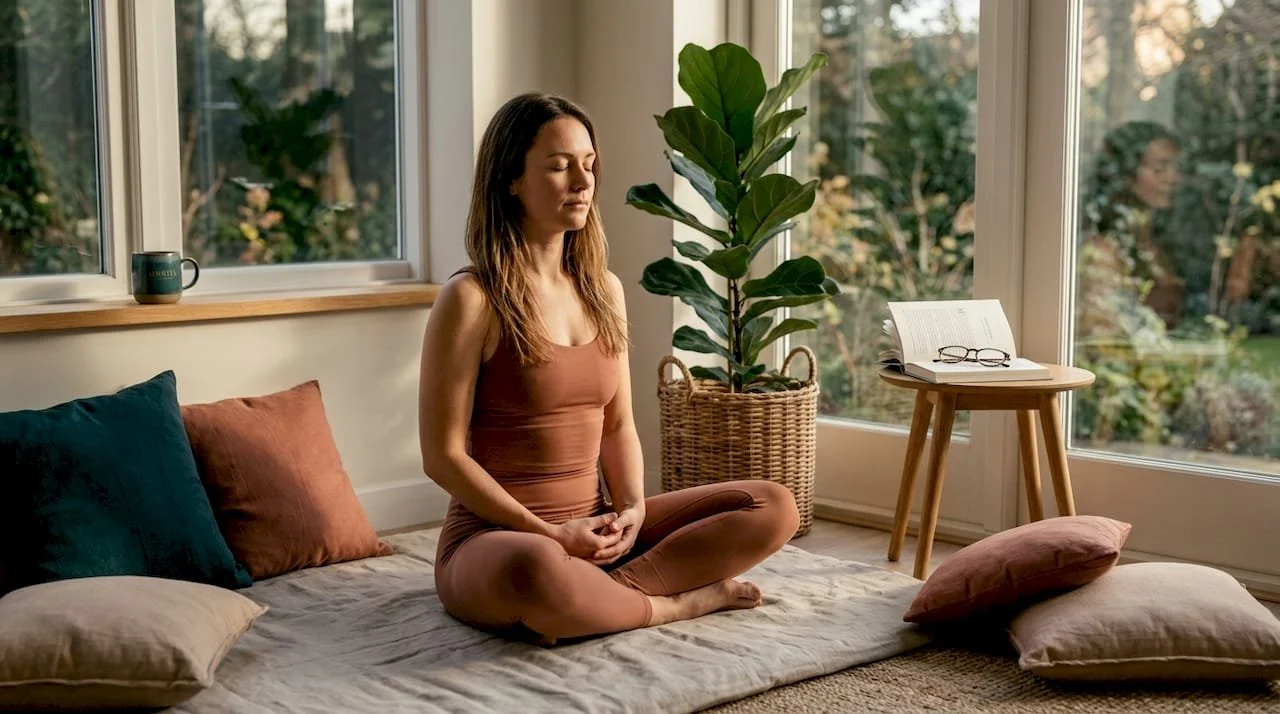
The popular image of mindfulness is someone cross-legged on a cushion, eyes closed, breathing in perfect silence. For many people, this image is not calming. It is intimidating. It is boring. It is physically uncomfortable. And it becomes one more wellness practice that feels like a test you are failing.
But mindfulness is not a posture. It is a quality of attention. It is the capacity to be present with your current experience without judgement or distraction. That capacity can be cultivated while walking, while washing dishes, while running, while gardening, while doing almost anything that engages your body and your senses. The stillness of traditional meditation is one path. It is not the only path.
This article explores active, embodied forms of mindfulness for people who cannot or do not want to sit still. These practices require no special equipment, no quiet room, and no previous experience. They require only the willingness to bring full attention to what your body is already doing.
The Problem With the Sitting Myth
The assumption that mindfulness requires stillness creates two major barriers. First, it excludes people for whom sitting is physically difficult or painful—those with chronic pain, mobility limitations, restless energy, or conditions like ADHD that make sustained stillness genuinely challenging. Second, it frames mindfulness as an escape from daily life rather than an integration into it.
When mindfulness is only available on a cushion in a quiet room, it becomes a separate activity that competes with your schedule for time and space. When mindfulness is available during your existing movements, it becomes a layer of awareness you can add to activities you already perform. The second approach is more sustainable because it does not require you to create new time. It asks you to change how you use existing time.
Research supports this flexibility. A 2018 meta-analysis in the journal Mindfulness found that movement-based mindfulness practices produced equivalent benefits to seated meditation for reducing anxiety, improving attention, and enhancing emotional regulation. The mechanism is the same: training attention to remain with present experience rather than drifting into rumination or distraction. The container is simply different.
Walking Meditation: The Original Mobile Practice
Walking meditation is not a modern adaptation. It is one of the oldest forms of contemplative practice, dating back thousands of years in Buddhist traditions. Yet it is often treated as a beginner’s stepping stone toward “real” sitting meditation, when in fact it is a complete practice in its own right.
The technique is straightforward. Choose a path—ten to thirty feet in length, indoors or outdoors. Walk slowly. Feel the sole of your foot lift, move through the air, and make contact with the ground. Notice the shift of weight from heel to toe. Feel the subtle adjustments in your ankles, knees, and hips that maintain balance. When your mind wanders, return attention to the sensations of walking.
That is the entire practice. It sounds simple because it is simple. The difficulty lies in maintaining attention, not in mastering technique. A ten-minute walking meditation can be as challenging and as beneficial as a ten-minute sitting practice. For people who struggle with stillness, it is often more accessible because the movement itself provides sensory anchors that hold attention more naturally.
Walking meditation does not require a special location. A hallway in your home works. A section of sidewalk works. The key is choosing a defined path and walking it with intention rather than wandering aimlessly. The boundaries support the focus.
Mindful Movement: Yoga, Tai Chi, and Beyond
Structured movement practices offer another entry point for active mindfulness. Yoga, tai chi, qigong, and similar disciplines combine physical postures or sequences with breath awareness and present-moment attention. The movement becomes the meditation.
These practices are particularly effective because they introduce novelty. When learning a new posture or sequence, you naturally focus on the sensations and coordination required. There is no space for rumination because the body demands full engagement. Even experienced practitioners report that familiar sequences continue to offer new sensory details when approached with fresh attention.
The mindfulness element is not automatic, however. You can perform yoga poses while planning dinner. You can run through a tai chi form while rehearsing a conversation. The physical practice alone does not guarantee mental presence. The intention must be there: to use the movement as a container for attention, not merely as exercise.
If formal classes are unavailable or unappealing, simple home practices work equally well. A ten-minute sequence of slow stretches, performed with full attention to breath and sensation, cultivates the same capacity for present-moment awareness. The value is in the attention, not the tradition.
Everyday Tasks as Mindfulness Practice
The most radical and accessible form of active mindfulness is also the most overlooked: bringing full attention to ordinary daily tasks. Washing dishes. Folding laundry. Brushing teeth. Preparing food. These activities are already part of your life. They require no additional time. They need only a shift in how you inhabit them.
Washing dishes. Feel the temperature of the water on your hands. Notice the weight of each dish. Observe the transformation from dirty to clean. Listen to the sound of water, the clink of ceramics, and the rhythm of your own breathing. When thoughts arise, acknowledge them and return attention to the sensory experience of the task.
Preparing food. Notice the colours and textures of the ingredients. Smell the herbs as you chop them. Feel the resistance of the knife against the cutting board. Hear the sizzle as food hits the pan. Cooking becomes a meditation when attention replaces autopilot.
Walking the dog. Feel the leash in your hand. Notice the rhythm of your steps matching or diverging from your dog’s pace. Observe the air temperature, the quality of light, and the sounds of the neighbourhood. Let the walk be the practice, not a task to complete while mentally elsewhere.
Showering. Feel the water pressure against your skin. Notice the temperature shift as you adjust the faucet. Smell the soap. Listen to the sound of water hitting the floor. The shower is one of the few daily experiences rich enough in sensation to reliably anchor attention—if you choose to be present for it.
The common thread is sensory engagement. Mindfulness during everyday tasks is not about thinking differently. It is about noticing what is already happening through your senses. The body is always present. The mind is usually elsewhere. These practices train them to occupy the same moment.
The body is always present. The mind is usually elsewhere. These practices train them to occupy the same moment.
Running, Swimming, and Rhythmic Exercise
Repetitive physical activities create natural conditions for mindfulness. The body settles into a rhythm. The breath finds a pattern. The mind, deprived of the usual stimulation, either quiets or becomes highly aware of subtle sensations.
Running is perhaps the most studied example. Many runners report entering a state of effortless attention where thought quiets and awareness expands to include the rhythm of breathing, the feeling of footfalls, and the temperature of air moving past skin. This is not daydreaming. It is not distraction. It is a form of moving meditation where the activity itself holds attention.
Swimming offers similar conditions with the added element of water. The sensation of buoyancy, the sound of breath echoing in your ears, and the visual simplicity of the lane lines—all create a sensory environment that naturally focuses attention. The inability to monitor a phone or hold a conversation removes common sources of distraction.
Cycling, rowing, dancing, and even vigorous hiking produce comparable states. The requirement is sustained rhythmic movement at a moderate intensity. Too easy, and the mind wanders. Too hard, and the body demands all attention for survival. The sweet spot is challenging but sustainable, where the body is engaged enough to anchor the mind but not so overwhelmed that awareness narrows to pure exertion.
Creative Practices as Mindfulness
Art, music, craft, and manual creation offer another form of active mindfulness. These practices engage the hands, the senses, and the imagination in ways that naturally exclude rumination. When you fully absorb yourself in shaping clay, mixing colours, or learning a chord progression, you have no mental space for rehearsing tomorrow’s meeting.
Psychologist Mihaly Csikszentmihalyi called this state “flow”—complete absorption in an activity where self-consciousness disappears and time perception alters. Flow states share many characteristics with advanced mindfulness: present-moment awareness, non-judgemental observation, and a sense of effortlessness despite engagement.
The difference is that flow often requires skill and challenge alignment, while mindfulness can be practiced at any skill level. A beginner gardener pulling weeds with full attention is practicing mindfulness. An expert gardener designing a landscape may enter flow. Both are valid. Both are trained to have the same capacity for sustained, non-distracted presence.
Choose a creative practice that engages your hands and your senses. Knitting. Woodworking. Baking. Drawing. Playing an instrument. The specific activity matters less than the quality of attention you bring to it. Beginner’s mind—approaching the activity as if for the first time, noticing details you have overlooked—transforms routine into practice.
Starting Your Active Mindfulness Practice
You do not need to choose one approach. The most sustainable mindfulness practice is varied, adapting to your energy, your schedule, and your circumstances. Some days, a walking medicon fits. Other days, mindful dishwashing is what is available. Flexibility is strength.
Begin with one activity you already perform daily. Commit to doing it with full attention for five minutes. Notice what you see, hear, feel, smell, and taste. When your mind wanders—and it will—gently return attention to the sensory experience. That return is the practice. Not staying perfectly focused. Returning, again and again, with patience rather than frustration.
Over time, expand to other activities. Build a repertoire of mindful moments throughout your day. A morning walk. A mindful lunch. An evening stretch. These moments accumulate. They create a life lived with more presence and less autopilot. They prove that mindfulness is not something you add to your life. It is a way of living the life you already have.
Mindfulness is not something you add to your life. It is a way of living the life you already have.
About the Author: At Vida Sana y Natural, we believe that small, intentional changes to your daily environment can lead to lasting improvements in well-being. Our articles blend practical home design with evidence-based wellness strategies to help you create a life that feels balanced, energised, and truly yours.
Related Articles
From Vida Sana y Natural
- How to Create a More Mindful Daily Lifestyle
- The Art of the Intentional Pause: Reclaiming 60 Seconds
- How to Create a Better Wind Down Routine at Night
- How to Design a Morning Routine Space That Actually Works
- How to Stack New Habits Onto Existing Ones (The Right Way)
- How to Use Movement to Reset Your Focus Mid-Day
Recommended External Reading
- How to Meditate: A Beginner’s Guide — Mindful.org
- Mindfulness Meditation May Ease Anxiety, Mental Stress — Harvard Health
